Netanyahu claims victory as Likud leads polls, but path to majority remains unclear
With half the votes counted, the prime minister projects a right-wing bloc of 56 seats, yet analysts warn the coalition math is difficult and the party is at a historic low.
By Anastasia Petrova ·

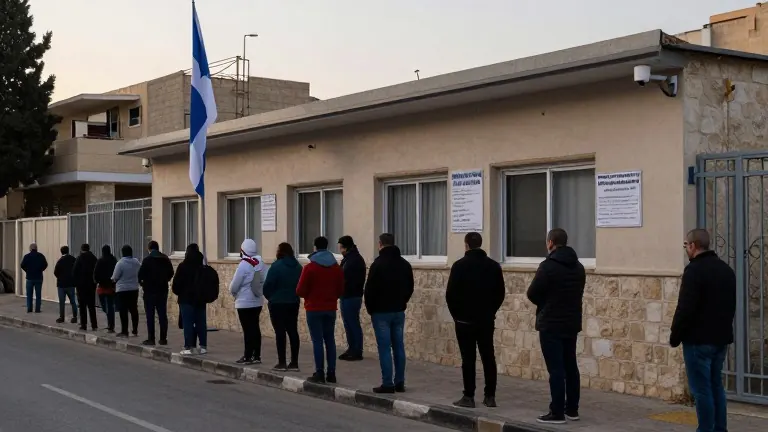
Israelis voted in legislative elections on Tuesday, with early results showing Prime Minister Benjamin Netanyahu’s right-wing bloc projected to win 56 seats, while the center-left alliance of former defense minister Gadi Eisenkot is expected to secure 49. Neither side has a clear path to the 61 seats required for a governing majority in the Knesset.
Speaking to supporters at Likud party headquarters in West Jerusalem shortly after polls closed, Netanyahu declared that his party was on track to become the largest in the country. He stated that Likud was projected to win 27 seats, compared to 21 for Eisenkot’s Yashar party, according to projections from Israeli Channels 12 and 13. He noted that the final tallies are typically one or two days away from being complete.
The prime minister outlined his administration’s achievements since taking office in 2022, citing the elimination of regional leaders and the establishment of security zones in Gaza, Lebanon, and Syria. He listed the names of those killed, including Mohammed Deif, Ismail Haniyeh, Yahya Sinwar, Hassan Nasrallah, and Iranian Supreme Leader Ali Khamenei. Netanyahu argued that a right-wing government is necessary to ensure long-term security, warning against relying on coalitions with Arab parties that he described as being against Israel’s existence.
He also pointed to a "historical opportunity" to work with United States President Donald Trump to remove what he called the existential threat of Iran. He claimed that Israel had struck the Iranian regime and brought it to the edge of the abyss, stating that Iran is now weaker than ever while Israel is stronger.
Analysts suggest the road to forming a government will be complicated. Alon Pinkas, a former Israeli ambassador who served as consul general in New York City, noted that the party securing the seat majority may need to strike an uncomfortable coalition deal. He added that opposition voters would likely resist a deal with Netanyahu’s bloc. Marwan Bishara, a senior political analyst for Al Jazeera, said Netanyahu projected success to mask the fact that Likud’s current standing is its lowest since 2009. Dan Perry, another political analyst, described the speech as an effort to spin the situation favorably after exit polls were released.
The next step in the process is for the President of Israel to consult with party leaders to determine which figure is best positioned to form a government. This consultation typically begins within 24 hours of the official certification of results. Until then, the projected numbers stand as the primary guide for coalition negotiations, with the Likud bloc holding a lead over the Eisenkot alliance but lacking a definitive majority on its own.
Source: Al Jazeera