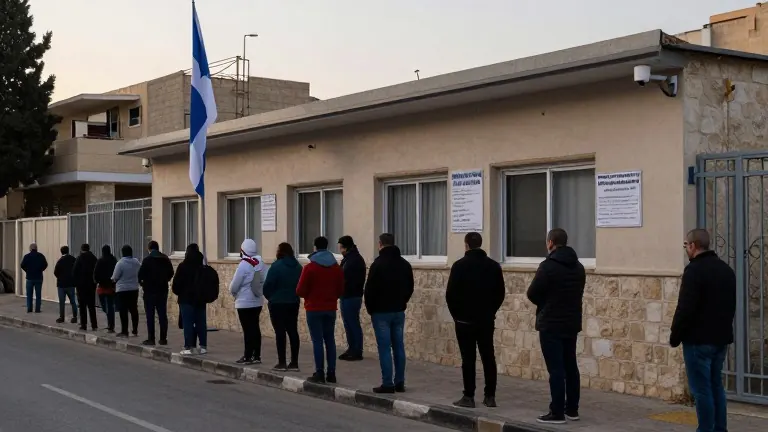
Netanyahu faces voters in first general election since October 2023
Israelis vote Tuesday in a race defined by right-wing candidates and questions over judicial reform, as the government seeks to retain power despite war crimes charges.
By Lina Zhang ·
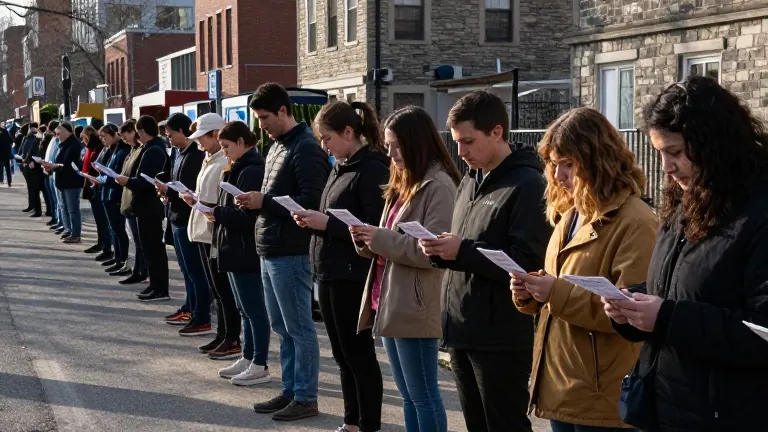
Voters in Israel cast ballots on Tuesday in a general election that marks the first vote since the Hamas-led attack of October 7, 2023. The contest pits Prime Minister Benjamin Netanyahu against a self-styled Zionist opposition bloc that has largely embraced right-wing policies. Netanyahu, the country's longest-serving premier, seeks to extend his tenure after leading a coalition of far-right ultranationalist and ultra-Orthodox parties. He faces an ICC arrest warrant for war crimes in Gaza and a domestic corruption trial, charges he denies.
The political center has eroded over the past few decades, a trend that accelerated under Netanyahu's current government. Analysts point to the 2018 Nation-State Law as a key milestone in this shift. That legislation formally enshrined Jewish supremacy and facilitated the expansion of settlements in the occupied West Bank. Under the current administration, the government has moved to strip the Supreme Court of its power to review executive actions. It has also flouted rulings on the conscription of ultra-Orthodox citizens, a group whose parties provide critical support to the coalition.
The campaign has focused on accountability for security failures and the military service of ultra-Orthodox men. However, mainstream candidates have largely excluded Arab-led parties from potential coalitions. This exclusion reflects a broader consensus among Zionist parties on the treatment of Palestinians. Daniel Levy, a former government adviser, noted that no candidate is running on a platform to challenge the war in Gaza. He said the election is not a referendum on the conflict because mainstream parties do not disagree on the fundamental approach to Palestinian citizens and territories.
Yehouda Shenhav-Shahrabani, an Israeli sociologist, described the political system as operating within a framework of Jewish supremacy. He argued that none of the leaders presenting themselves as alternatives to Netanyahu can be genuinely described as left-wing. The sociologist stated that the current reality is rooted in Zionist political thought itself. He emphasized that Arab-led parties, which represent one-fifth of Israel's population, remain excluded from the governing process by a system built on prejudice.
Ahron Bregman, a senior teaching fellow at King's College London, said the outcome will determine the atmosphere of Israeli governance. He noted that Netanyahu is a deeply divisive figure who stirs strong emotions among both supporters and critics. Bregman cautioned that any new government will reflect the sharp rightward turn in Israeli politics that occurred after October 7, 2023. He advised against expecting a major change in the overall direction of policy, stating that the new leadership will mirror the existing political reality.
The vote is closely watched by regional and global observers. The stakes extend beyond the names on the ballot to the character of the Israeli state. Yossi Mekelberg, a senior fellow at Chatham House, framed the election as a choice between a functioning democracy and one in name only. He added that the decision also involves whether to maintain the occupation of the West Bank or pursue its annexation. The government currently includes figures such as National Security Minister Itamar Ben-Gvir and Finance Minister Bezalel Smotrich, both of whom supported the judicial overhaul and the surge in West Bank violence.
More than 74,000 people have been killed in Gaza since the war began. Deadly attacks continue almost daily in the enclave despite a yearlong ceasefire. In the occupied West Bank, settler violence and Israeli army raids have intensified. The election results will determine whether the current coalition remains in power or if a new government forms, though analysts agree the policy shift to the right will persist regardless of the winner.
Source: Al Jazeera