40 New Settlements Proposed in Naqab as Israel Votes
Finance Minister Bezalel Smotrich’s plan to add one million residents to the south stands against a backdrop of rising tensions for the country’s 20% Palestinian population.
By Michael Thompson ·
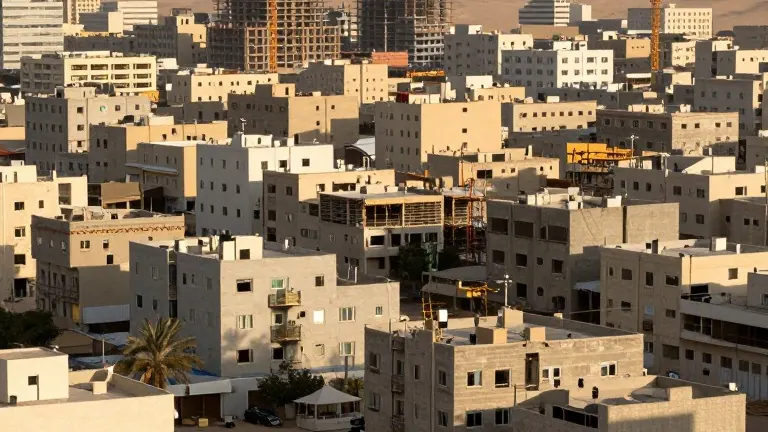
Finance Minister Bezalel Smotrich has proposed establishing 40 new settlements in the Naqab and northern Israel. The plan, unveiled in August, aims to add one million Jewish residents to those regions. It includes building dozens of farms and creating hundreds of thousands of new housing units. The goal is to extend the model of territorial control currently used in the West Bank into areas with high Palestinian populations.
Israel’s general election takes place on October 27. For most voters, the choice is between Prime Minister Benjamin Netanyahu and former general Gadi Eisenkot. For the 20% of the population that is Palestinian, the decision involves a different calculation. Many citizens question whether voting can change their political and collective rights as the political mainstream shifts further to the right.
Since the Nakba of 1948, Palestinians who remained in the new state’s territory have lived under distinct conditions. They gained citizenship in 1952 and saw martial law lifted in 1966. However, these citizens face discriminatory laws and systemic underfunding of basic services. The state has historically used land confiscation and education regulation to reshape Palestinian identity, promoting a separate Arab Israeli status.
Violence has intensified in recent years. Organized crime groups, often operating with little law enforcement intervention, have carried out killings, shootings, and arson. These groups have obtained advanced weapons stolen from army stockpiles or smuggled across borders. This militarization of crime has claimed hundreds of lives in Palestinian communities.
Settler expansion has also accelerated since October 2023. Religious nationalist groups began establishing themselves in mixed cities like Jaffa and Lydd in 2021. This process of recolonization continues as settlements expand and land seizure increases. The government has also strengthened settler security squads, integrating them into the broader security framework.
National Security Minister Itamar Ben-Gvir has played a key role in these shifts. He issued 300,000 gun licenses since taking office. He also established the National Guard, a force prompted by the May 2021 Dignity Uprising in towns like Lydd, Haifa, and Umm al-Fahm. The guard is intended to suppress unrest, raising concerns about the right to protest.
The United Arab List, led by Mansour Abbas, has argued that joining the anti-Netanyahu camp can halt the far-right agenda. In 2021, the party joined a coalition that excluded Netanyahu. However, it failed to implement fundamental changes for Palestinian citizens. Member Mazen Ghnaim publicly acknowledged in 2022 that his party could not push through beneficial policies despite its ruling status.
The author of the source analysis believes another four years of far-right rule poses an immediate threat to Palestinian rights. They plan to vote in the upcoming election. However, they argue that electoral participation must be paired with more radical political responses. This includes reforming the High Follow-Up Committee for Arab Citizens and building stronger grassroots structures in Palestinian society.
Source: Al Jazeera