Israeli Election Largely Ignores Diplomatic Fallout Abroad
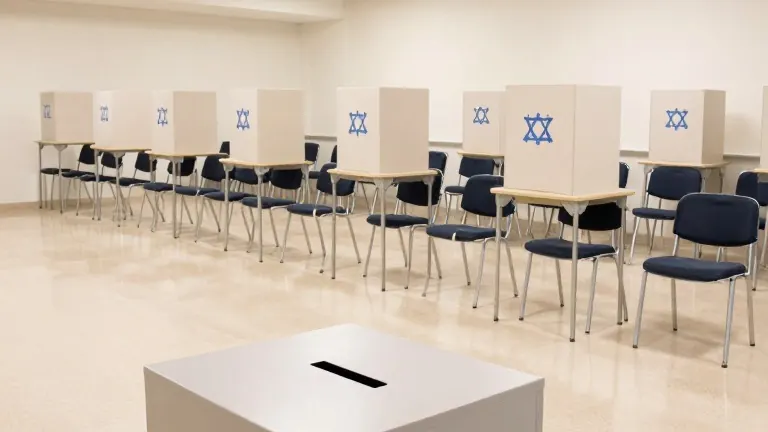
Voters head to the polls on Oct. 27 with security and the aftermath of Oct. 7 dominating campaign talk, despite a Pew poll showing 67% of adults in 36 countries hold unfavorable views of Israel.
By Anastasia Petrova ·
Israeli voters go to the polls on Oct. 27 amid a sharp rise in reports of their citizens facing hostility abroad, from a restaurant refusing service in Greece to a couple questioned at a California hotel. Yet interviews with analysts and campaign observers show that questions of diplomatic standing are largely absent from the campaign.
A Pew Research Center survey conducted between February and May found a median of 67% of adults across 36 countries hold an unfavorable view of Israel. Reports of harassment have accumulated in parallel: tourists confronted in Montenegro in July, an Israeli woman turned away from a restaurant in Greece, a mother and daughter allegedly beaten in Thailand, and a couple in California asked if they were "baby killers."
Yaakov Katz, a senior fellow at the Jewish People Policy Institute, said most Israelis view the country's image as a problem outside their control. He recounted the argument Prime Minister Benjamin Netanyahu makes: "no matter what we do, the whole world's against us, and no matter what we say, it's antisemitism." Katz said, "People accept that argument, and to a large extent, they don't push back on it. Why? Because part of it is true, right?"
Katz added that the average Israeli does not fully grasp how declining support, particularly in the United States, could eventually carry "existential consequences for the country." He said, "Most people here don't think that far ahead." Ofir Dayan, a senior fellow at the Institute for National Security Studies at Tel Aviv University, said Israelis are aware of and concerned about conditions abroad but face more immediate pressures after more than three years of war.
Dayan said, "Israeli voters are very much one-issue voters, and the issue in this election is security." She added, "We're not remote enough from Oct. 7 for people to completely shift their vote and vote based on this idea." Peter Lerner, former Israel Defense Forces spokesman for the international press, told the Jewish Telegraphic Agency that the "issue of Israel's international standing is secondary to two things: Netanyahu or not Netanyahu, and the left vs. the right."
Of the dozen or so parties expected to win Knesset seats, only a few have proposed public diplomacy plans. The B'Yachad Party, led by Naftali Bennett and Yair Lapid, proposes a non-voting observer in the Knesset to focus on ties with world Jewry. Amcha Yisrael, led by former IDF Brig. Gen. Ofer Winter, lists Yoseph Haddad and Fleur Hassan-Nahoum, both public diplomacy activists.
Journalist Eylon Levy, a former Israeli government spokesman, told JTA's "Waiting for 61" podcast that public diplomacy, known in Israel as hasbara, "is not a goal in itself" for most candidates. He said the debate centers on "who can manage relations with the world so that we can achieve our national interests." Levy said a change of government on Oct. 27 would not repair perceptions but would buy Israel "some goodwill, definitely among those who say, in theory, we support Israel."
Source: The Jerusalem Post