
Netanyahu Seeks Fourth Term as Israeli Polls Show No Clear Knesset Majority
Voters face a tight race where the Arab turnout and two new ultra-Orthodox parties could determine if Israel avoids a third election cycle since 2023.
By Benjamin Parker ·
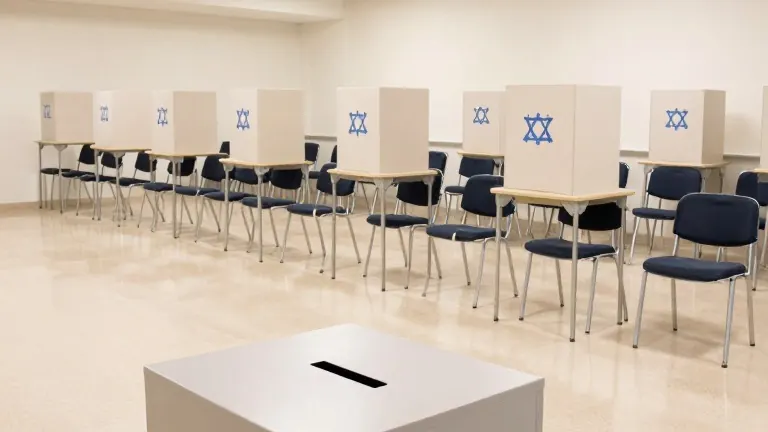
Israelis head to polling stations on Tuesday for a Knesset election that polls indicate will likely result in a fragmented parliament. Neither the right-wing bloc led by Prime Minister Benjamin Netanyahu nor the opposition change bloc is projected to secure the 61 seats required to form a majority government. The uncertainty stems from a narrow margin between the two camps, which has left analysts expecting a prolonged period of coalition negotiations or a potential return to the ballot box.
The election takes place against the backdrop of a multi-front war that has engulfed the country since the Hamas attacks of October 7, 2023. Israel remains engaged in active combat in Gaza, Lebanon, and Syria, while tensions with Iran persist. President Donald Trump endorsed Netanyahu’s leadership last week, warning that the United States might have to conduct military operations against Iran independently if Netanyahu loses power. Trump stated that if Israel has the wrong leader, America will have to do the work itself, a claim he says he is not inclined to undertake.
Netanyahu, the longest-serving prime minister in Israeli history, is running on a platform that emphasizes the need for a strong right-wing government to manage ongoing military campaigns. His Likud party argues that only his leadership can prevent a government reliant on Arab parties, which he views as a strategic risk. His campaign slogan contrasts the right-wing bloc with the alternatives of a Palestinian state or an Iranian nuclear bomb. To illustrate the existential threat he perceives from Iran, Netanyahu shared an AI-generated image of a mushroom cloud over Tel Aviv on social media over the weekend.
Opposing him is a diverse coalition of centrist, left, and Arab parties united by their desire to remove Netanyahu from office. The leading figure in this camp is Gadi Eisenkot, the centrist Yashar party leader and former head of the Israeli military. Eisenkot, who lost his son and two nephews in the Gaza war, frames himself as a unifying veteran capable of healing national divisions. He has criticized Netanyahu’s rhetoric on Iran, accusing the prime minister of relying on fear-mongering and threats, including the recent use of nuclear imagery in the campaign.
Two variables could tip the balance of power in this tight race. The first is Arab voter turnout. Arab Israelis comprise approximately 20 percent of the population, and Yohanan Plesner, president of the Israel Democracy Institute, noted that higher participation in this demographic reduces the likelihood that Netanyahu can form a government with his current far-right allies. Jehad Abomoch, a cafe owner in Baqa al Gharbiya, said many Arab Israelis feel they have no future under the current administration, driving them to vote.
The second variable involves two new political parties that are focused on the issue of mandatory military service for ultra-Orthodox Jews. These parties aim to challenge Netanyahu’s alliance with religious partners by demanding that ultra-Orthodox men serve in the army. Polls show both parties hovering near the threshold required to enter the Knesset. If either crosses that line, they could disrupt the existing coalition math and provide a path for a new government.
If neither bloc secures a majority, Israel faces several procedural options. Lawmakers may switch sides to form a coalition, a practice with strong precedent in Israeli politics. Alternatively, the change bloc could attempt to form a minority government if it wins more seats than the right-wing bloc, even if it does not reach 50 percent of the 120 seats. Arab parties could facilitate this by abstaining from votes against such a government. Should negotiations fail, the country will hold new elections. Israel held five elections between 2019 and 2022 due to similar deadlocks, a scenario Plesner warns could recur if politicians adhere strictly to their campaign promises.
Source: CBS News