Two Blind Elders Flee Somalia's Worst Drought in Decades for a Crowded Camp
Mohamed Kheir Issack, 80, and Issack Farow Hassan, 75, left their village in southern Somalia and now shelter in a fast-growing camp for displaced people near Dollow.
By Jacob Leary ·
Blindness sharpens the other senses. For two elderly Somali men, that has meant hearing the dull thud of camels more clearly and smelling death more strongly after weeks, months and years without the rains their livelihoods relied on.
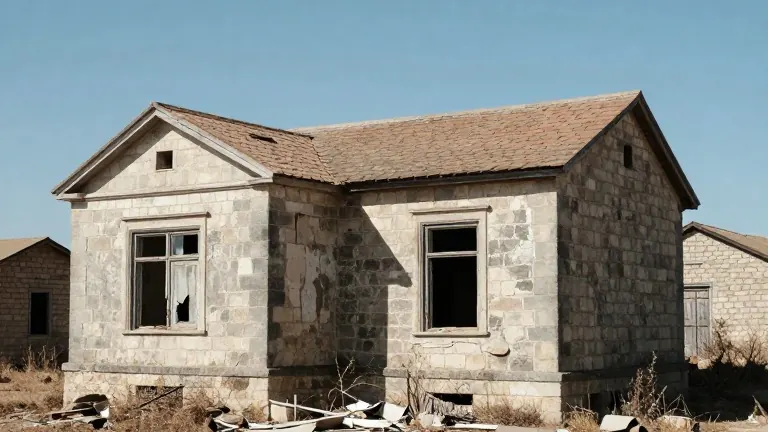
Mohamed Kheir Issack is 80. Issack Farow Hassan is 75. They are close enough to be called brothers, and they walk hand in hand through the darkness they live in, steadying themselves with canes. Somalia is suffering its worst drought in more than half a century, and it has taken their animals and their homes.
The Associated Press first saw them crouched in a cloud of dust. They were among hundreds of displaced people who had recently reached this border town, part of a hunger-driven migration affecting more than a million Somalis. The report was produced with the Pulitzer Center on Crisis Reporting as part of a series on people uprooted by rising seas, drought, heat and other effects caused or worsened by climate change.
Droughts are nothing new in Somalia, but they now come more often and leave less time to recover. Herders and farmers who have long known where to take their livestock when usual water sources dry up have been overwhelmed, since the last four rainy seasons failed to end the dry spell. "The droughts of the past were not like these ones. We could cope with them," Issack said.
Higher temperatures cause rainwater to evaporate faster, leaving little for crops or drinking, and the United Nations says East Africa is the part of the world hit hardest by drought. Experts say the current rainy season, the fifth in a row, will not fix the situation, and the sixth, expected early next year, is not expected to either. The UN's humanitarian chief, Martin Griffiths, said displaced people "know before we do that their way of life is over."
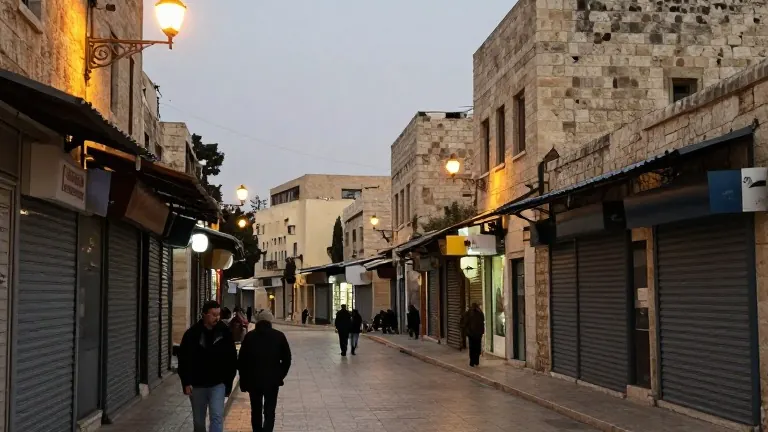
Issack and Hassan had spent their whole lives in Ufurow, a community in southern Somalia about 300 kilometers (186 miles) away, and had never left until now. Returning is not an option. Beyond the climate, the area is held by al-Shabab, an extremist group tied to al-Qaida that demanded half of residents' harvests even as they went hungry. Its presence blocks humanitarian aid and deepens the crisis. An estimated 250,000 people died in a 2011 famine, largely because al-Shabab did not allow aid through. Fighters stopped the vehicle carrying the two men, searched it and let it pass for the three-day trip to the camp. "They didn't want us," Issack said.
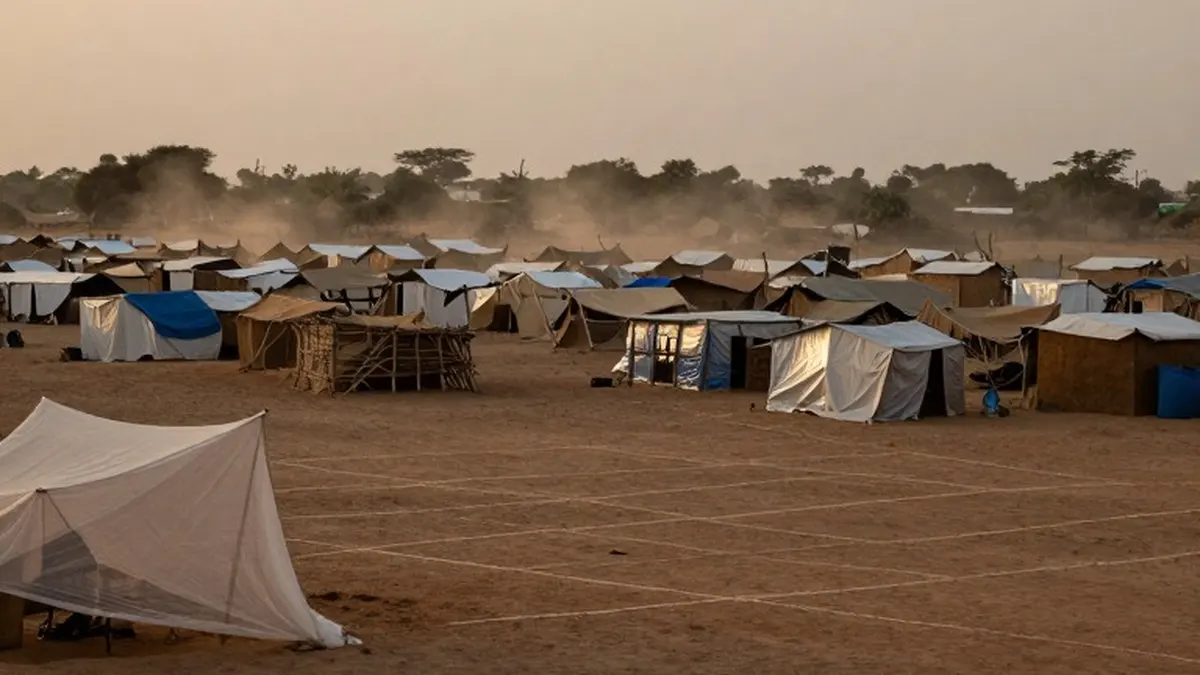
At the camp outside Dollow, a man marks lines in the dirt to outline plots for new arrivals, each about the size of a large double bed. Families must find their own materials, and they hurry to dig holes for poles to hold up branches or tarps. Within 24 hours, that section looked like the rest of the camp, filled with plastic and canvas huts, a few with mosquito nets.
Neighbors helped the two men build a hut. Food is scarce, and tea is nearly all they consume because the aid they expect has not arrived. Conditions are often undignified. "We don't have toilets," Hassan said. He pointed to a mattress filling most of the hut and said, "Today at least we have this."
Their blindness and age leave them unable to work, and someone must lead them by the hand to the camp office if they need help. Relatives and friends have scattered. People from Ufurow cluster in one part of the camp, but Issack said the community is no longer a reference point. "We can't see who came, or how many," he said. Hassan has a phone but can barely use it. "I can't dial," he said. "I can answer."
Originally published by News Media House · Source: New York Daily News
More World · New York news · Report a business · Got a Story?